


 3D Printing With Digital ABS PolyJet Photopolymer
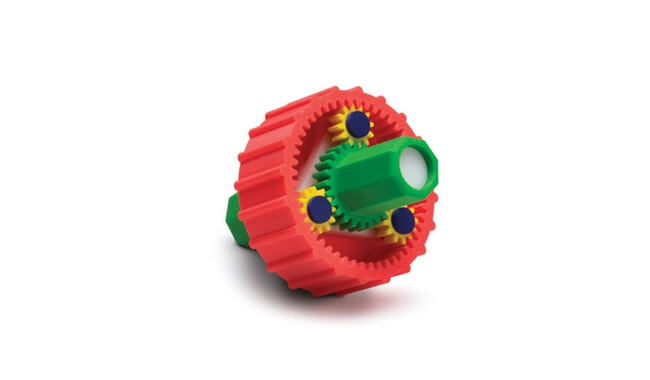
Digital ABS (fabricated inside the 3D printer from RGD515 and RGD535) is designed to simulate standard ABS plastics by combining high-temperature resistance with toughness. Digital ABS2 delivers those properties plus superior rigidity and toughness in walls thinner than 1.2 mm (.047 in.). Both materials are suitable for parts that require PolyJet technology’s highest possible impact resistance and shock absorption.
Easy support removal
Increase productivity and gain even more design freedom with the ability to easily remove support material from delicate features and small cavities. Soluble support material (SUP706) empowers hands-free removal, plus improved manual or WaterJet removal. It is compatible with all PolyJet materials (except hearing aid and dental materials) and works on all Objet1000 Plus and Connex3 systems.
A wide range of applications
- Functional prototypes

- Manufacturing tools
- Molds, including injection molds
- Snap-fit parts for high or low temperature use
- Electrical parts, casings, mobile phone casings
- Engine parts and covers

PolyJet is a powerful 3D printing technology that produces smooth, accurate parts, prototypes and tooling. With microscopic layer resolution and accuracy down to 0.1 mm, it can produce thin walls and complex geometries using the widest range of materials available with any technology.
How PolyJet works
PolyJet 3D Printing works similarly to inkjet printing, but instead of jetting drops of ink onto paper, PolyJet 3D Printers jet layers of curable liquid photopolymer onto a build tray.
The process is simple:
- Pre-processing: Build-preparation software automatically calculates the placement of photopolymers and support material from a 3D CAD file.
- Production: The 3D printer jets and instantly UV-cures tiny droplets of liquid photopolymer. Fine layers accumulate on the build tray to create one or several precise 3D models or parts. Where overhangs or complex shapes require support, the 3D printer jets a removable support material.
- Support removal: The user easily removes the support material by hand, with water or in a solution bath. Models and parts are ready to handle and use right out of the 3D printer, with no post-curing needed.
Benefits of PolyJet 3D Printing
- PolyJet technology offers exceptional detail, surface smoothness and precision.
- Create smooth, detailed prototypes that convey final-product aesthetics.
- Produce accurate molds, jigs, fixtures and other manufacturing tools.
- Achieve complex shapes, intricate details and delicate features.
- Incorporate the widest variety of colors and materials into a single model for unbeatable efficiency.
 |
 |
|
 |
 |
|
 |
 |
|
 |
 |
|
 |
||
FDM (Fused Deposition Modeling) Technology 3D print durable parts with real thermoplastic
How FDM Works 3D printers that run on FDM Technology build parts layer-by-layer from the bottom up by heating and extruding thermoplastic filament. The process is simple: 1. Pre-processing: Build-preparation software slices and positions a 3D CAD file and calculates a path to extrude thermoplastic and any necessary support material. 2. Production: The 3D printer heats the thermoplastic to a semi-liquid state and deposits it in ultra-fine beads along the extrusion path. Where support or buffering is needed, the 3D printer deposits a removable material that acts as scaffolding. 3. Post-processing: The user breaks away support material or dissolves it in detergent and water, and the part is ready to use.
FDM benefits
- The technology is clean, simple-to-use and office-friendly
- Supported production-grade thermoplastics are mechanically and environmentally stable
- Complex geometries and cavities that would otherwise be problematic become practical with FDM technology
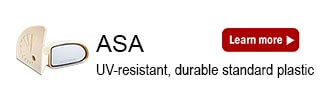
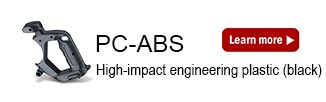
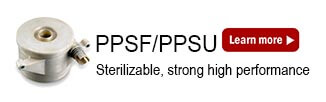
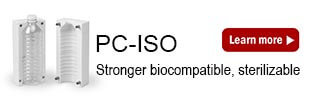
FDM Thermoplastics FDM Technology uses the same tried and tested thermoplastics found in traditional manufacturing processes. For applications that demand tight tolerances, toughness and environmental stability – or specialized properties like electrostatic dissipation, translucence, biocompatibility, VO flammability or FST ratings – there’s an FDM thermoplastic that can.
 |
 |
|
 |
 |
|
 |
 |
|
 |
 |
|
 |
 |
|
 |
 |
|